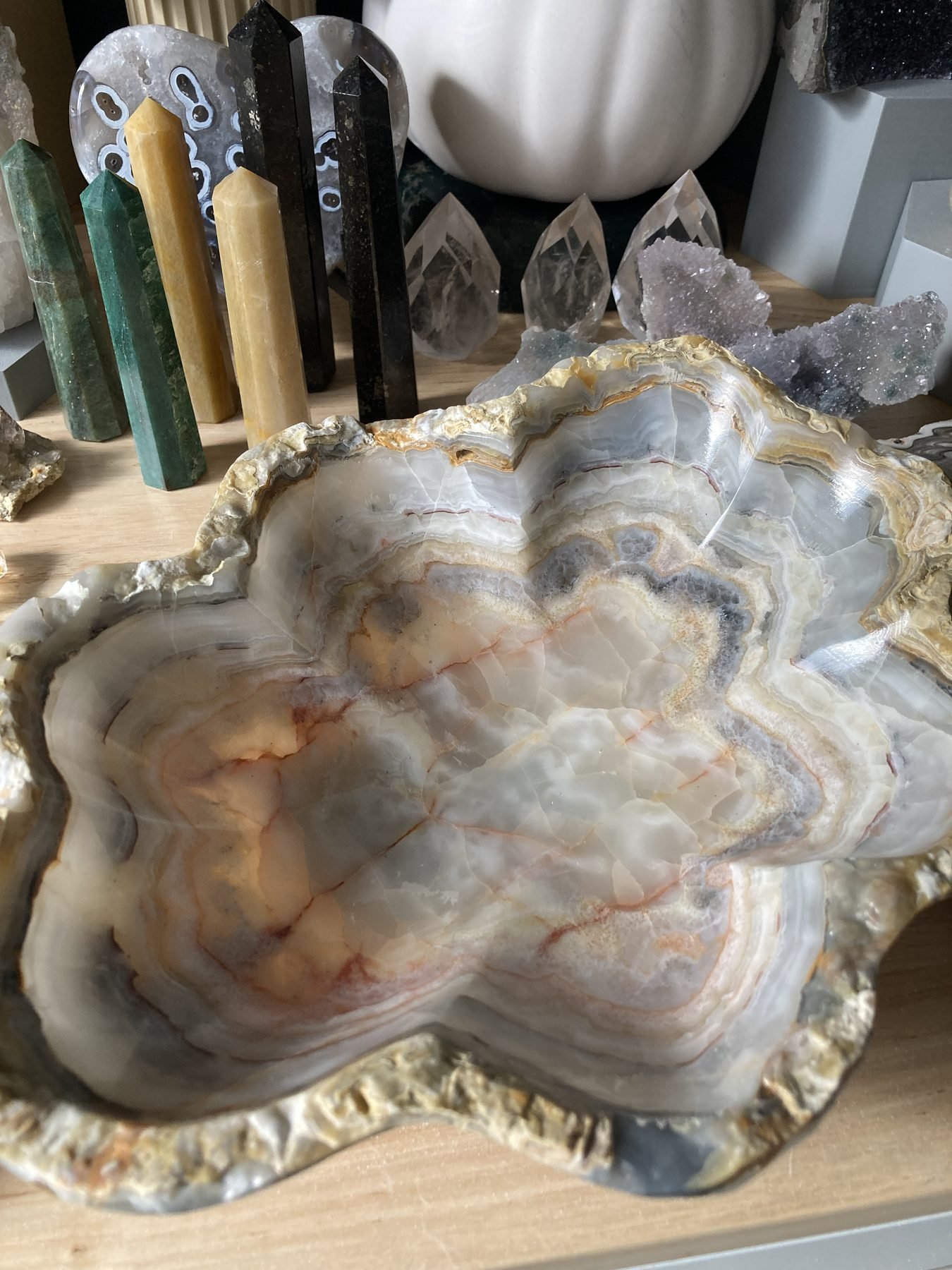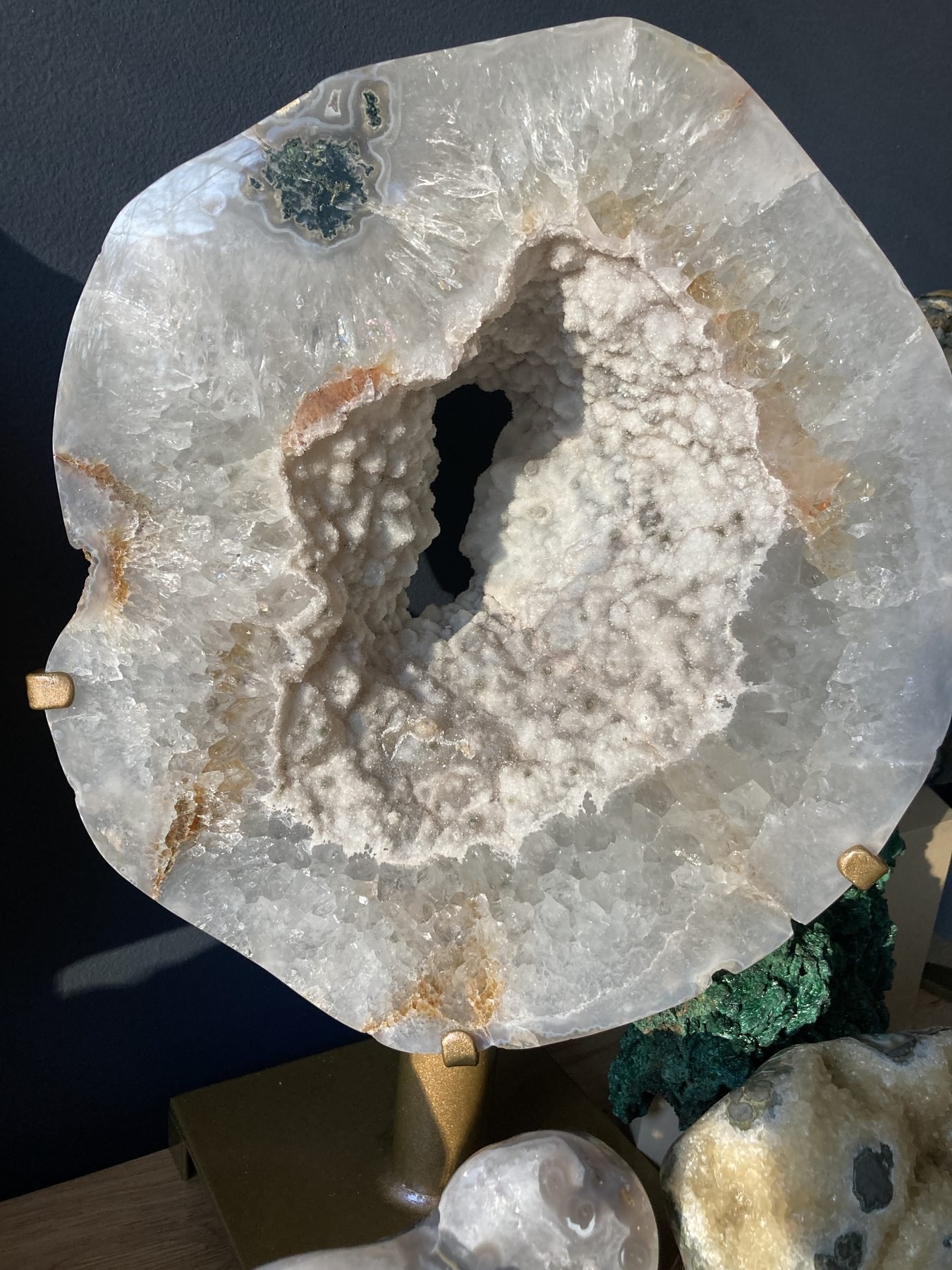
What belongs. What holds. What changes a room.
The sensibility behind Modern Mineral was sharpened in luxury retail — Neiman Marcus, Saks Fifth Avenue, Louis Vuitton — environments where composition mattered: what stopped the eye, what elevated a shelf, what made a room feel resolved rather than crowded. We brought that eye to stone.
This is not a mystical script and it is not a geological lecture. It is a design-forward reading of objects: form, surface, silhouette, temperature, balance, and mood. We teach people to trust what they notice — before explanation gets in the way.
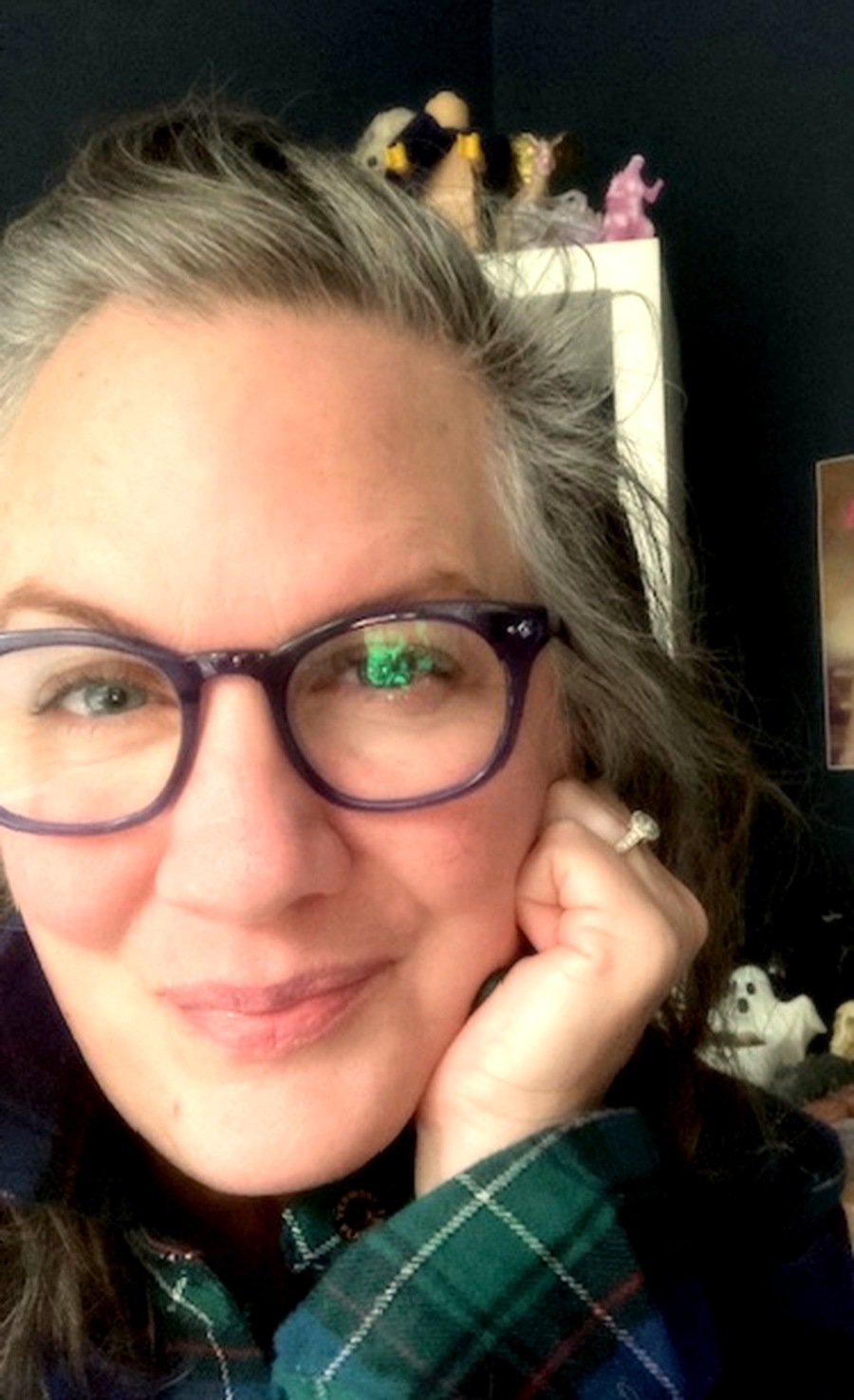
I never used to care about rocks. I spent most of my life walking right past them.
Now I dream about them — their form, their size, their color. I choose them carefully, and I picture where each one will go, who it will sit beside.
Opening the boxes still feels like Christmas morning. Pieces that have traveled halfway around the world arrive, and unwrapping them is a joy I can't quite explain. For a while, they live with me. I clean them, style them, photograph them, move them from room to room, learning how they behave in different light.
Not every stone earns that attention. Most don't. The ones that do are the ones that stop me — a flash that wasn't there a second ago, a weight that changes a shelf, a silhouette I keep returning to.
Most people walk right past them. Some pause. And then there is that moment when someone sees what I saw. They ask, “What’s that?” And I know. They’ve found it too.
The hardest part is letting it go. I worry over the packing, lie awake hoping it arrives safely and is admired the way it deserves. Then a message comes: it’s home, and they love it. They send a photograph of where it landed. And my heart is full again.
The searching, the choosing, the letting go. A small obsession that became a life’s work.
Modern Mineral exists because some objects reward attention — not because they come with prescribed meaning, but because noticing something can change how you see everything around it.